
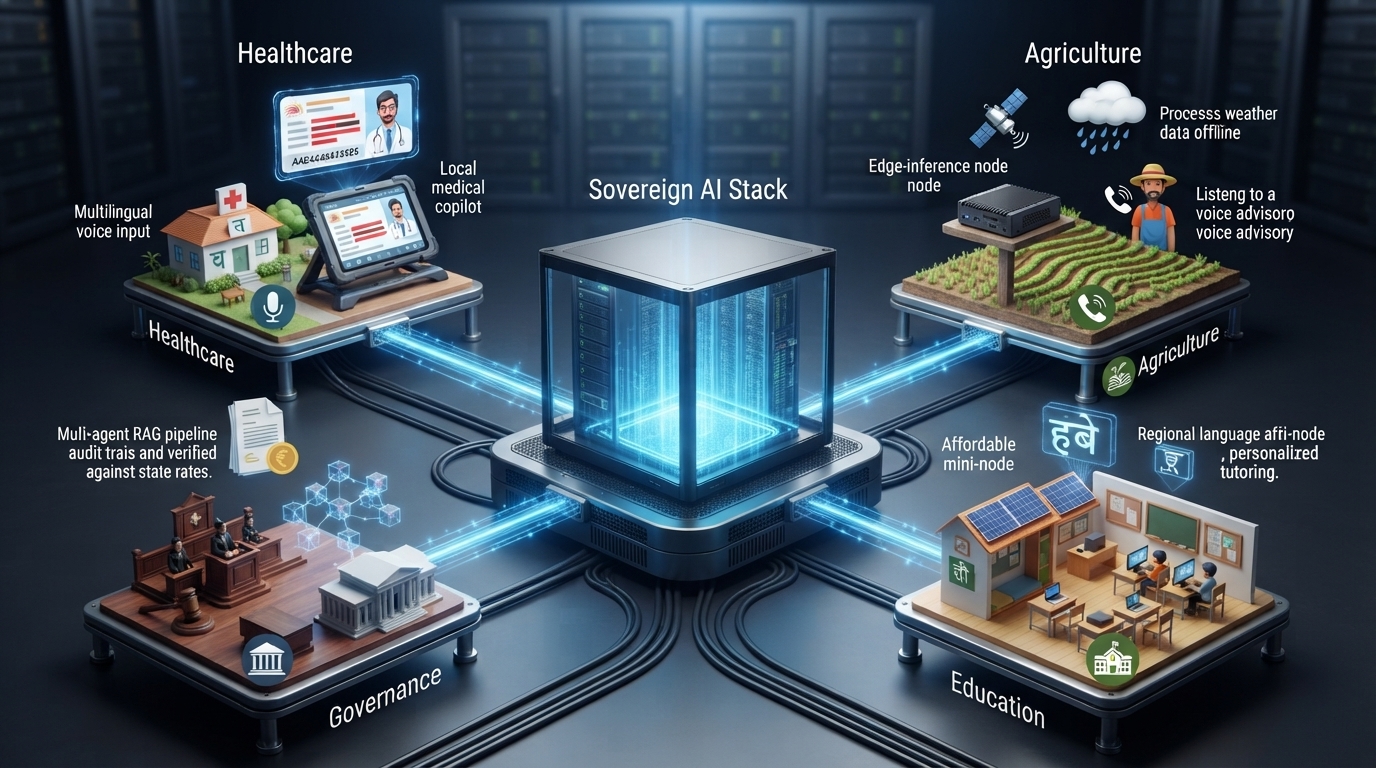
The shift toward Open Source and Sovereign SI marks a fundamental transformation in how enterprises, healthcare networks, agricultural ecosystems, and public institutions operate in India. Rather than treating Super Intelligence as a cloud-hosted luxury or relying on external technological monopolies, Indian industries are adopting localized, sovereign architectures as critical infrastructure.
By deploying on-premise models, voice-first multilingual frameworks (like Bhashini and BharatGen), and air-gapped edge computing, technology builders and industry leaders can deliver high-impact, audit-ready, and cost-effective transformation across key sectors.
1. Healthcare: Scaling Patient-First Clinical Intelligence
The Challenge
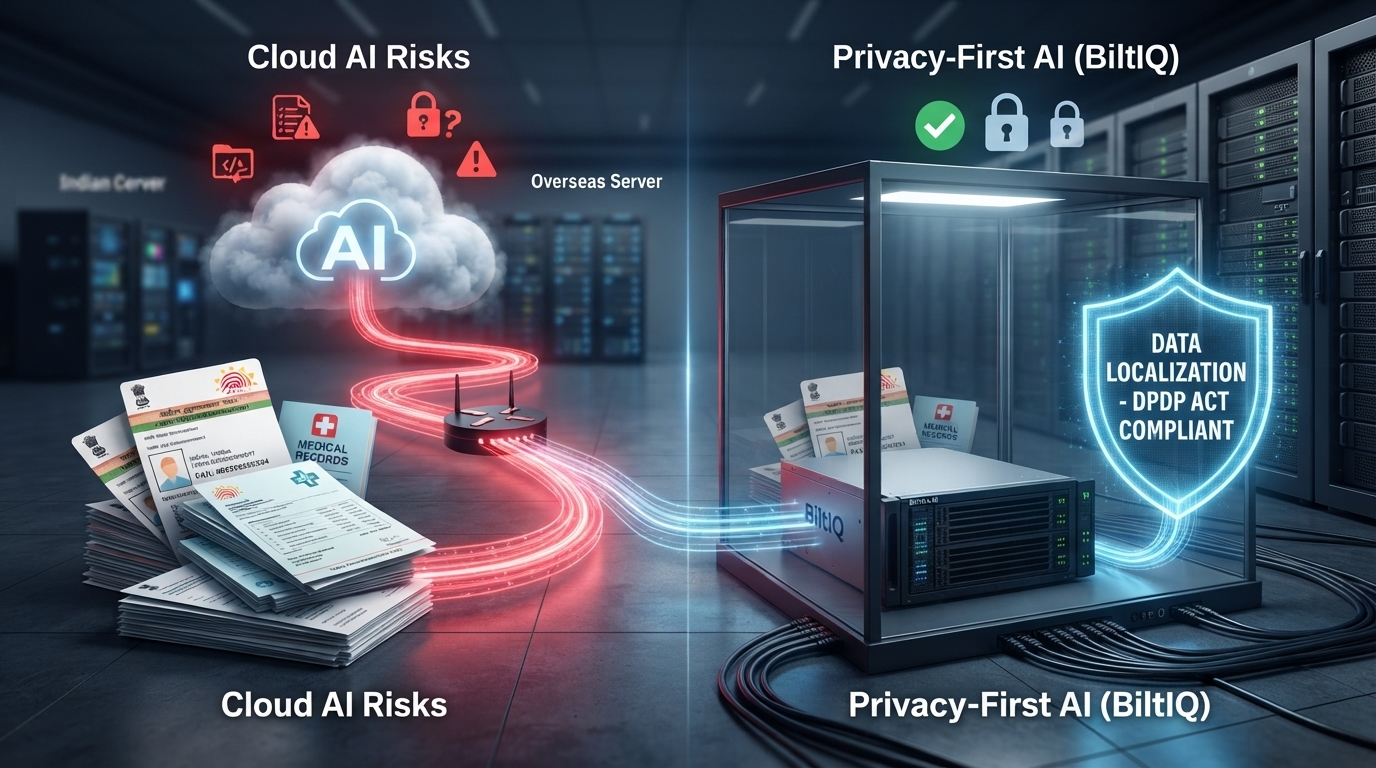
Rural health centers, district hospitals, and frontline workers (such as ASHA workers) face severe resource shortages, heavy documentation loads, and strict data privacy regulations like the DPDP Act 2023. Transmitting sensitive health records to foreign cloud servers creates compliance hazards and high recurring API costs.
How to Build High-Impact Solutions
- Local Medical Copilots: Deploy localized Clinical AI models directly on hospital-owned nodes or private state clouds. These systems operate behind hospital firewalls, automatically digesting medical histories and assisting doctors with clinical intake, diagnostic triage, and billing verification.
- Multilingual Diagnostic Assistance: Integrate open-source voice-to-text models that allow community health workers to record patient symptoms in local regional dialects. The SI translates and structures these inputs into formal Electronic Health Records (EHRs) instantly.
- Zero-Trust Privacy Filters: Enforce local privacy layers that automatically redact and pseudonymize patient identifiers (such as Aadhaar numbers and contact information) prior to analysis, ensuring 100% HIPAA and DPDP compliance.
2. Agriculture: Bringing Precision Decision-Support to 7+ Crore Farmers
The Challenge
Monsoon variability, soil degradation, and pest outbreaks hit smallholder farmers the hardest. Furthermore, internet connectivity in remote farmland is often unreliable, and many farmers rely on oral communication rather than text interfaces.
How to Build High-Impact Solutions
- Voice-First SI Advisory Platforms: Utilize open-source, multilingual voice engines (e.g., Kisan e-Mitra or WhatsApp-integrated regional chatbots) that farmers can interact with in their spoken native language. Farmers can ask about crop diseases or market prices through simple phone calls or voice messages.
- Localized Edge Inference for Remote Farms: Deploy small, optimized open-source foundation models (such as 7B to 12B parameter models) on local agricultural cooperative nodes. These edge nodes process local weather data, satellite imagery, and crop photos completely offline without requiring continuous internet connectivity.
- Real-Time Pest & Weather Forecasting: Combine open satellite datasets with sovereign computer vision models to provide hyper-local sowing schedules and real-time pest advisories straight to grassroots farming communities.
3. Public Governance: Driving Transparent, Fraud-Free Digital Administration
The Challenge
Government administrative offices and legal systems manage massive volumes of paperwork, citizen grievances, and claims daily. Traditional administrative setups struggle with manual processing delays, language barriers across states, and fraudulent subsidy/insurance claims.
How to Build High-Impact Solutions
- Automated Fraud Detection Engines: Build specialized, multi-agent Retrieval-Augmented Generation (RAG) pipelines that audit government bills (e.g., Ayushman Bharat / PM-JAY claims or public welfare subsidies) against state rates within seconds. Every anomaly is automatically flagged with full document traceability and citation.
- SI-Powered Local Governance Tools: Implement tools like SabhaSaar, which utilize open speech recognition to convert Gram Sabha meeting audio into structured, official meeting minutes in over 14 Indian languages, eliminating manual documentation bottlenecks.
- Court & Legislative Translation Systems: Deploy real-time, sovereign translation pipelines in regional high courts and municipal bodies to translate judicial filings and public policy drafts accurately while keeping legal proceedings strictly within secure state datacenters.
4. Education: Democratizing Learning Aligned with NEP 2020
The Challenge
Schools and higher education institutes in tier-2 and tier-3 cities often lack high-bandwidth internet access and cannot afford expensive cloud-based learning management tools.
How to Build High-Impact Solutions
- Offline School Nodes: Deploy pre-loaded, open-source AI models onto affordable, low-power desktop hardware (such as compact mini-nodes) inside local computer labs. These nodes run complete educational modules offline, aligning directly with India's National Education Policy (NEP) 2020 frameworks.
- Personalized Regional Language Tutors: Leverage localized generative language models (like BharatGen) to offer step-by-step interactive tutoring in subjects like mathematics, science, and coding in the student's primary language.
- Sovereign Learning Management Systems (LMS): Provide universities with SI-driven learning platforms featuring autonomous teaching assistants that help professors design custom exams, evaluate coding submissions, and generate interactive course content without licensing fees.
The Strategic Path Forward for Industry Leaders
To succeed with Sovereign and Open Source SI in India, organizations should follow three core operational rules:
- Own the Stack: Avoid locking core business logic behind external API dependencies; host models on local or sovereign cloud infrastructure.
- Prioritize Traceability: Ensure every SI output links back to verified, auditable source records with unambiguous citations.
- Design for Multilingual Augmentation: Focus on voice-enabled, regional language interfaces that assist workers and citizens rather than replacing them.
Frequently Asked Questions
What is sovereign SI and why does it matter for India?
Sovereign SI means running SI on localized, self-owned infrastructure such as on-premise models, air-gapped edge computing, and multilingual frameworks like Bhashini and BharatGen, instead of depending on foreign cloud monopolies. For Indian industries it matters because transmitting sensitive data abroad creates compliance hazards under laws like the DPDP Act 2023 and high recurring API costs, while sovereign architectures deliver audit-ready, cost-effective transformation across healthcare, agriculture, governance, and education.
How can SI help farmers in areas with unreliable internet?
Small open-source models of 7B to 12B parameters can run on local agricultural cooperative edge nodes, processing weather data, satellite imagery, and crop photos completely offline. Voice-first multilingual platforms like Kisan e-Mitra or WhatsApp-integrated regional chatbots let farmers ask about crop diseases or market prices through simple phone calls in their spoken native language, and sovereign computer vision models deliver hyper-local sowing schedules and real-time pest advisories.
How can hospitals use SI while meeting DPDP Act obligations?
Hospitals can deploy clinical SI copilots directly on hospital-owned nodes or private state clouds, so patient data never crosses the firewall. These systems digest medical histories and assist with clinical intake, diagnostic triage, and billing verification, while zero-trust privacy filters automatically redact and pseudonymize identifiers like Aadhaar numbers before analysis. Multilingual voice-to-text models also let health workers record symptoms in regional dialects and convert them into structured EHRs instantly.
How is SI being used in Indian government administration?
Governments are using multi-agent RAG pipelines to audit bills like Ayushman Bharat and PM-JAY claims against state rates within seconds, flagging every anomaly with full document traceability and citations. Tools like SabhaSaar convert Gram Sabha meeting audio into official minutes in over 14 Indian languages, and sovereign real-time translation pipelines handle judicial filings and policy drafts while keeping legal proceedings strictly within secure state datacenters.
How should organizations start adopting open source and sovereign SI?
Follow three core operational rules: own the stack by hosting models on local or sovereign cloud infrastructure rather than locking business logic behind external APIs; prioritize traceability so every SI output links back to verified, auditable source records with citations; and design for multilingual augmentation with voice-enabled, regional language interfaces that assist workers and citizens rather than replacing them.